Shiran-kao
You Only Live TwiceShiran-kao is the deliberate appearance of knowing nothing, used on Kuro Island to keep James Bond’s presence and the island’s secrets from outsiders. It turns silence into a practical form of protection: villagers can hear questions, know the answers, and still present a united face that gives nothing away.
Meaning and First Use
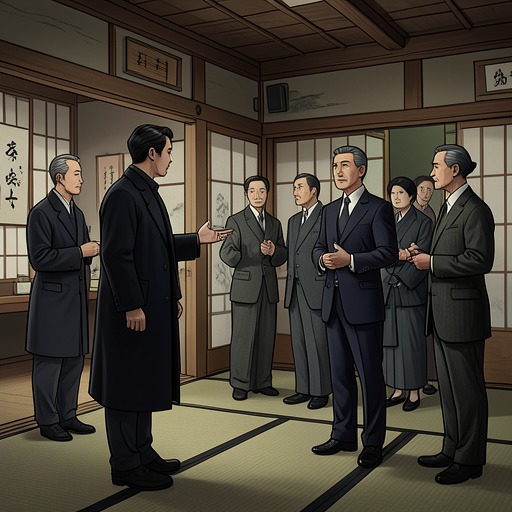
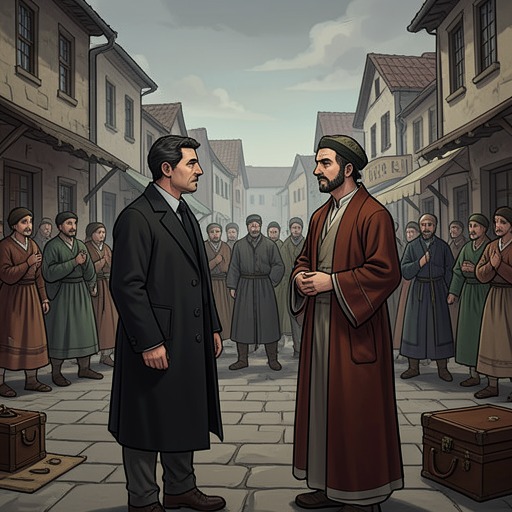
The phrase is explained as the face of someone who knows nothing. When men from the castle come by boat asking about a police visit, they offer the island elders cigarettes and sweets and ask what happened to the third visitor, who left with the police boat. The elders accept the gifts but do not answer the question; instead, they direct the men to the village priest. The priest supplies a plausible account: the missing visitor was in charge of fishing licences, had felt ill on the way to the island, and may have lain down in the boat on the return journey. The deception is not left to words alone. A boy watches from the High Place and reports that the visitors’ boat has gone to the bay beside the castle and been put back in its boathouse. The islanders thus learn where the inquiry leads while ensuring that those making it receive no reliable account of Bond.
A Communal Cover Story
Later, when the injured and amnesiac Bond is hidden in the cave behind the shrine, Kissy asks the priest to help keep him on Kuro. She proposes that, if the elders are instructed, they can tell future questioners that Bond left by swimming to the mainland and has not been heard from since. The priest agrees to do what he can and tells her that Bond must remain hidden for many weeks; only when things are quiet may he return to her parents’ house and be seen. The cover story therefore changes with Bond’s circumstances. At first it accounts for the disappearance of one visitor after a police-boat visit; later it is meant to explain why the man is no longer on the island at all. In both cases, Shiran-kao depends on coordinated refusal rather than a complicated fabrication: the community offers an ordinary explanation, then behaves as though there is nothing more to know.
Repeated Inquiries and Social Enforcement
The silence is tested repeatedly. Police come from Fukuoka, the official Tiger Tanaka arrives from Tokyo, and later a huge man claiming to be from Australia proves especially difficult for Kissy to shake off. Even as outside attention returns, the island’s face of ignorance holds, and Kuro keeps Bond’s presence secret. The practice also determines how people treat Bond in public. After an absence from the island, Kissy walks hand in hand with him along the foreshore among the nets and boats. The people smile at the pair but look through them rather than greet them: by the priest’s decree, their foreign guest does not officially exist. Shiran-kao has become more than a reply to investigators; it shapes ordinary social conduct so that concealment can continue in plain sight.
Protection and Cost
Shiran-kao gives Kissy time to care for Bond while he recovers from a grave head wound and remains unable to remember his past. Its protection has a personal purpose: she wants to keep him with her, but tells the priest that she will help him leave if he wishes to go. The communal silence shields Bond while leaving that future choice unresolved. The same concealment also restricts what Bond can learn. As he heals, Kissy tells him the history of the Ama and Kuro but parries his questions about the world beyond the island; she keeps him away from the south coast, where seeing the castle might bring his memory back. Shiran-kao thus preserves his safety by helping to sustain his ignorance. Its significance lies in that double effect: a shared refusal to acknowledge the truth protects a vulnerable man, while also helping to keep him within the small, sheltered world that others have chosen for him.